
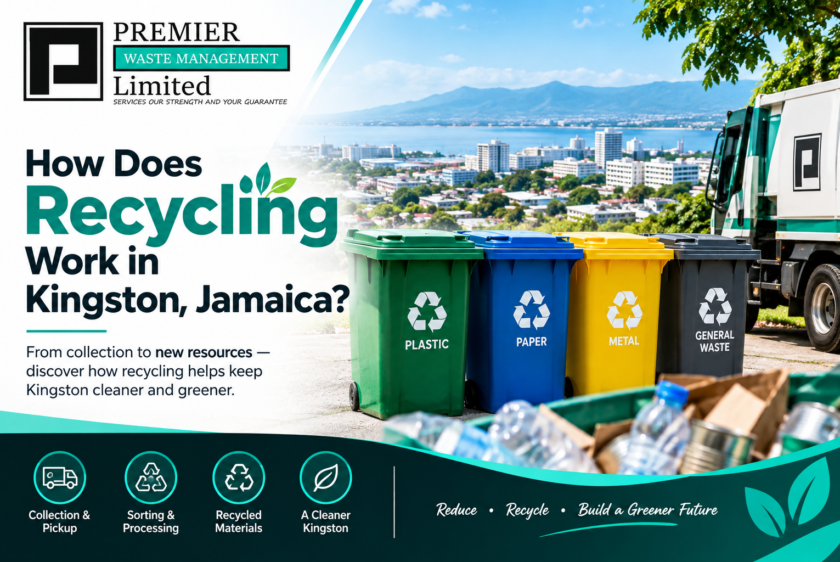
How Does Recycling Work in Kingston, Jamaica?
Recycling plays an important role in keeping Kingston, Jamaica, cleaner, reducing landfill waste, and supporting more responsible resource management. From plastic bottles and cardboard packaging to metal scraps and commercial recyclables, many discarded materials can be recovered instead of being thrown away. Understanding how recycling Kingston services work helps households and businesses make informed decisions about waste disposal.
Whether you operate an office, retail store, restaurant, warehouse, or industrial facility, adopting effective recycling practices can reduce unnecessary waste and improve environmental responsibility. With proper sorting, collection, and processing, recyclable materials can become valuable resources rather than environmental burdens.
What Is Recycling and Why Does It Matter in Kingston?
Recycling is the process of collecting and processing used materials so they can be turned into new products or raw materials. It reduces the demand for virgin resources and can help limit the amount of waste sent to disposal facilities.
In Kingston, responsible recycling can help address waste-management challenges associated with growing commercial activity, packaging waste, and everyday consumption.
Key benefits include:
- Less landfill waste: Diverts suitable materials from disposal.
- Resource conservation: Supports the reuse of paper, metals, plastics, and other recoverable materials.
- Cleaner surroundings: Encourages better waste-handling practices.
- Business sustainability: Helps companies demonstrate environmental responsibility.
- Improved waste organization: Separating recyclables makes waste management more efficient.
How Does the Recycling Process Work?
Professional recycling services generally follow several steps. The exact process depends on the material, collection provider, and available local processing facilities.
1. Separating Recyclable Materials
The process begins when recyclable materials are separated from general rubbish. Common examples include clean cardboard, paper, suitable plastic bottles, and certain metal containers.
Businesses should use clearly labelled containers and keep recyclable materials as clean and dry as practical. Food-contaminated packaging and mixed waste may be unsuitable for some recycling programs.
2. Recycling Collection and Transportation
Once materials have been separated, they can be collected through an appropriate recycling program. Recycling collection services in Kingston may support businesses that generate regular quantities of recyclable waste.
Reliable recyclable waste collection in Kingston, Jamaica, can help organizations maintain cleaner storage areas and prevent recyclable materials from becoming mixed with general rubbish.
3. Sorting and Preparing Materials
Collected materials are sorted by type. Depending on the facility, this may involve manual inspection, mechanical equipment, or other separation methods.
Materials are then prepared for processing. Cardboard may be baled, metals separated by type, and suitable plastics sorted according to their composition.
4. Processing and Reuse
Prepared materials are sent to suitable processors where available. Paper fibres can be recovered for paper products, metals can be melted and reused, and accepted plastics can be processed into new materials.
Not every item can be recycled through every local program. Confirming accepted materials before arranging collection helps avoid contamination.
Common Types of Recycling in Kingston
Plastic Bottle Recycling
Plastic bottle recycling in Kingston, Jamaica, helps recover eligible plastic containers for further processing. Empty bottles should be handled according to the receiving program’s preparation requirements.
Paper and Cardboard Recycling
Offices, supermarkets, warehouses, and retail businesses often generate significant amounts of paper and cardboard. Keeping these materials dry and separate can make them easier to recover.
Scrap Metal Recycling
Scrap metal recycling in Kingston, Jamaica, can recover suitable metal materials from workshops, construction projects, manufacturing operations, and commercial facilities.
Commercial and Industrial Recycling
Commercial waste recycling in Kingston supports businesses seeking better ways to manage packaging, office paper, containers, and other recyclable materials. Industrial recycling may involve larger volumes and more specialized handling requirements.
How Premier Waste Supports Better Waste Management
Premier Waste helps businesses approach waste management with practical, service-focused solutions. For organizations exploring recycling Kingston options, the right approach begins with understanding the types of waste generated, the volume involved, and the collection arrangements required.
Businesses can benefit from organized waste collection, suitable waste-handling practices, and a clearer separation between general waste and potentially recyclable materials. Depending on the service required, a tailored waste-management plan can help offices, commercial premises, industrial operations, and other facilities maintain cleaner working environments.
Before arranging a service, businesses should confirm which recyclable materials can be accepted, how they should be prepared, and whether separate collection is available. This is particularly important for plastic packaging, cardboard, scrap metal, and materials generated in larger quantities.
Premier Waste can be contacted to discuss waste-management requirements, collection schedules, and suitable service options. Rather than assuming every material can be recycled through one program, businesses should choose arrangements that reflect their actual waste streams and local processing options.
A well-planned approach can simplify daily waste handling, improve workplace organization, and support more responsible resource use across Kingston.
FAQs About Recycling in Kingston, Jamaica
1. What materials can be recycled in Kingston?
Potentially recyclable materials include paper, cardboard, suitable plastic containers, and certain metals. Acceptance depends on the collection program and available processing facilities.
2. How do recycling services work in Kingston, Jamaica?
Services typically involve separating materials, arranging collection, transporting them to suitable facilities, sorting them, and preparing accepted materials for processing.
3. Can businesses arrange recycling pickup in Kingston?
Businesses can enquire about recycling pickup options based on their waste volume, material types, collection frequency, and service-provider availability.
4. Why is commercial recycling important?
Commercial recycling can reduce waste sent for disposal, support resource recovery, and help businesses improve their environmental practices.
5. Where can I find a recycling centre in Kingston?
Check with local waste-management providers and recycling organizations for current locations, accepted materials, opening hours, and drop-off requirements.
6. Can industrial waste be recycled?
Some industrial materials, including suitable metals and clean packaging, may be recoverable. Specialized or hazardous waste requires appropriate handling and approved disposal arrangements.
7. How can my business improve recycling?
Start by identifying common waste materials, separating recyclables, training staff, and confirming collection requirements with a suitable service provider.
Conclusion: Make Recycling Part of Your Waste Strategy
Understanding recycling Kingston services helps households and businesses make better decisions about waste separation, collection, and resource recovery. From plastic bottles and cardboard to scrap metal and commercial recyclables, the right practices can reduce unnecessary disposal and support a cleaner environment.
Looking for a practical waste-management solution in Kingston, Jamaica? Contact Premier Waste to discuss your business’s waste requirements, explore suitable collection options, and develop a more organized approach to waste management.


