
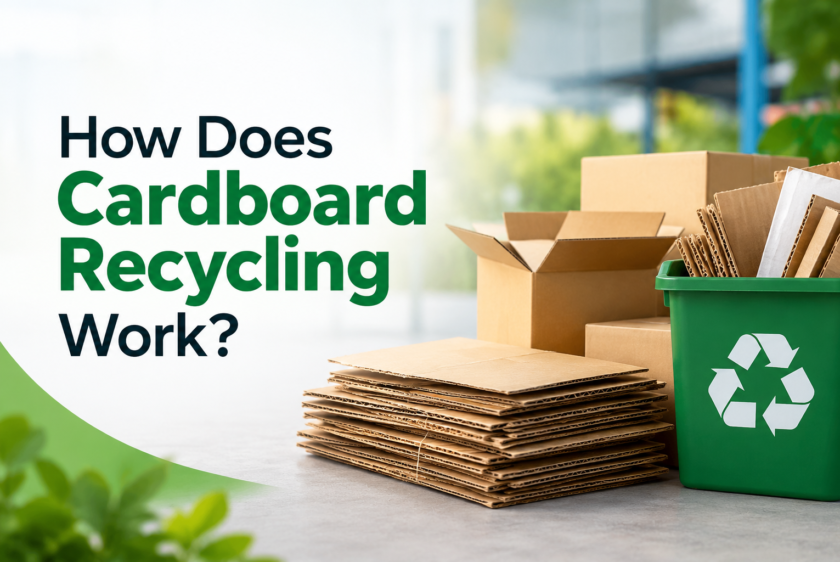
How Does Cardboard Recycling Work?
Cardboard is one of the most widely used packaging materials for shipping, storage, retail, and everyday deliveries. However, discarded boxes and packaging can quickly fill waste bins at homes, offices, warehouses, and commercial facilities. Recycling offers a practical way to reduce waste, conserve resources, and support a cleaner environment.
Understanding how cardboard recycling works helps businesses and individuals make better waste management decisions. The process involves collecting used cardboard, sorting suitable materials, removing contaminants, and transforming the recovered fibers into new paper products and packaging.
With proper handling and reliable collection arrangements, cardboard waste can become a valuable recyclable resource instead of unnecessary landfill waste.
What Is Cardboard Recycling?
Cardboard recycling is the process of recovering used cardboard products and converting their paper fibers into materials that can be used again. Common recyclable items include corrugated shipping boxes, clean packaging cartons, and many paperboard containers.
The process helps reduce the demand for virgin raw materials and can lower the amount of waste sent to landfills. However, cardboard must be prepared correctly to achieve effective recycling results.
How Does the Cardboard Recycling Process Work?
The recycling process involves several important stages, from initial collection to the production of new materials.
1. Collection and Transportation
The first step is gathering cardboard from residential properties, offices, retail stores, warehouses, distribution centers, and manufacturing facilities.
Professional cardboard waste collection arrangements help businesses manage packaging waste efficiently. Depending on the quantity generated, collection may take place through scheduled services or bulk collection arrangements.
2. Sorting and Inspection
Collected cardboard is sorted to separate recyclable materials from general waste. Workers or automated equipment identify unsuitable items, including heavily contaminated packaging and materials that cannot be processed by the facility.
Keeping cardboard separate from food waste, plastic bags, and other rubbish makes this stage more efficient.
3. Shredding and Pulping
Once sorted, the cardboard is broken into smaller pieces and mixed with water to create a pulp. This process separates the paper fibers so they can be recovered and prepared for manufacturing.
Depending on the material and recycling facility, additional screening and cleaning may remove adhesives, plastic fragments, ink residues, and other unwanted substances.
4. Cleaning and Fiber Preparation
The pulp undergoes further cleaning to remove remaining contaminants. Recovered fibers are then prepared for reuse.
Paper fibers can become shorter and weaker after repeated recycling, which means manufacturers may combine recycled fibers with new fibers to achieve the required strength and quality.
5. Manufacturing New Products
The prepared pulp is formed into sheets, pressed, and dried to produce new paper-based materials. These materials can be used for corrugated packaging, shipping boxes, paperboard products, and other suitable applications.
This completes the recycling cycle and gives recovered cardboard another useful purpose.
What Types of Cardboard Can Be Recycled?
Many common cardboard products can be recycled when they are clean and dry.
Examples include:
- Corrugated shipping and delivery boxes
- Cardboard cartons and packaging sleeves
- Clean cardboard storage boxes
- Paperboard packaging from household products
- Retail and warehouse packaging materials
Greasy, wet, wax-coated, or heavily contaminated cardboard may require different handling or may not be accepted. Always check the requirements of your local recycling provider.
Why Businesses Need Commercial Cardboard Recycling
Businesses that regularly receive deliveries often generate significant amounts of cardboard waste. Without an organized disposal system, packaging can occupy valuable storage space, create clutter, and increase waste handling demands.
Commercial cardboard recycling helps organizations establish a more structured approach to waste reduction. Reliable collection schedules, designated storage areas, and staff training can make recycling easier to manage.
Key benefits include:
- Better waste organization: Separate cardboard from general rubbish.
- Improved space management: Flatten boxes to reduce storage volume.
- Resource conservation: Support the recovery and reuse of paper fibers.
- Environmental responsibility: Help reduce avoidable landfill disposal.
- Operational efficiency: Establish consistent procedures for packaging waste.
Businesses generating large quantities of cardboard may also benefit from bulk cardboard recycling and dedicated collection arrangements.
How Premier Waste Supports Responsible Cardboard Waste Management
Premier Waste helps organizations approach waste management with practical collection and disposal solutions suited to their operational needs. For businesses that regularly handle packaging, a dependable waste management partner can make recyclable material handling easier to organist.
Through appropriate cardboard recycling services, businesses can work towards separating recyclable cardboard from general waste and improving their everyday waste handling practices.
Premier Waste can be considered for businesses seeking organized collection support, including commercial premises, retail operations, offices, and facilities that generate packaging waste. The right arrangement depends on waste volumes, site access, collection frequency, and the recycling options available locally.
Choosing a reliable cardboard recycling company involves more than arranging a pickup. Businesses should look for clear communication, suitable collection schedules, responsible material handling, and transparent information about how collected waste is managed.
Premier Waste encourages businesses to take a more structured approach to waste reduction by identifying recyclable materials, improving storage practices, and reviewing their collection requirements. Flattening cardboard boxes, keeping materials dry, and avoiding contamination can also help improve handling efficiency.
If your business needs dependable cardboard collection or broader cardboard waste management services, contact Premier Waste to discuss your requirements and identify an appropriate service arrangement.
Frequently Asked Questions
1. How long does cardboard recycling take?
The time required varies depending on collection schedules, transport, sorting capacity, and the recycling facility’s processing methods. The complete journey from collection to a new product may take days or longer.
2. Can all cardboard be recycled?
No. Most clean, dry cardboard is recyclable, but wax-coated, greasy, wet, or heavily contaminated materials may not be accepted by every facility.
3. Should cardboard boxes be flattened before recycling?
Yes. Flattening boxes reduces their storage volume, makes transportation more efficient, and helps businesses organist recyclable materials.
4. Where can businesses find cardboard recycling near me?
Businesses can search for local recycling providers offering commercial collection, packaging waste removal, or scheduled pickup services. Confirm accepted materials and service availability before arranging collection.
5. Is cardboard recycling beneficial for businesses?
Yes. It can improve waste organization, reduce the volume of general rubbish, support resource recovery, and demonstrate a commitment to responsible environmental practices.
6. What is cardboard recycling pickup?
Cardboard recycling pickup is a collection service that removes suitable cardboard from homes or business premises for transport to an appropriate recycling facility.
Conclusion: Make Cardboard Waste More Valuable
Understanding cardboard recycling allows businesses to manage packaging waste more responsibly and support the recovery of useful materials. From collection and sorting to pulping and manufacturing, each stage contributes to turning discarded cardboard into new products.
By keeping cardboard clean and dry, flattening boxes, and arranging suitable collection services, organizations can improve their waste management practices.
Ready to improve your business’s cardboard waste management? Contact Premier Waste to discuss your collection needs and explore practical waste management solutions for your premises.


